
Chapter 1
The Official Narrative
How Indian textbooks have portrayed Ghiyasuddin Tughlaq as a "just and moderate" ruler while systematically omitting the documented reality of his reign and its devastating consequences.
How Indian textbooks have portrayed Ghiyasuddin Tughlaq as a "just and moderate" ruler while systematically omitting the documented reality of his reign and its devastating consequences.
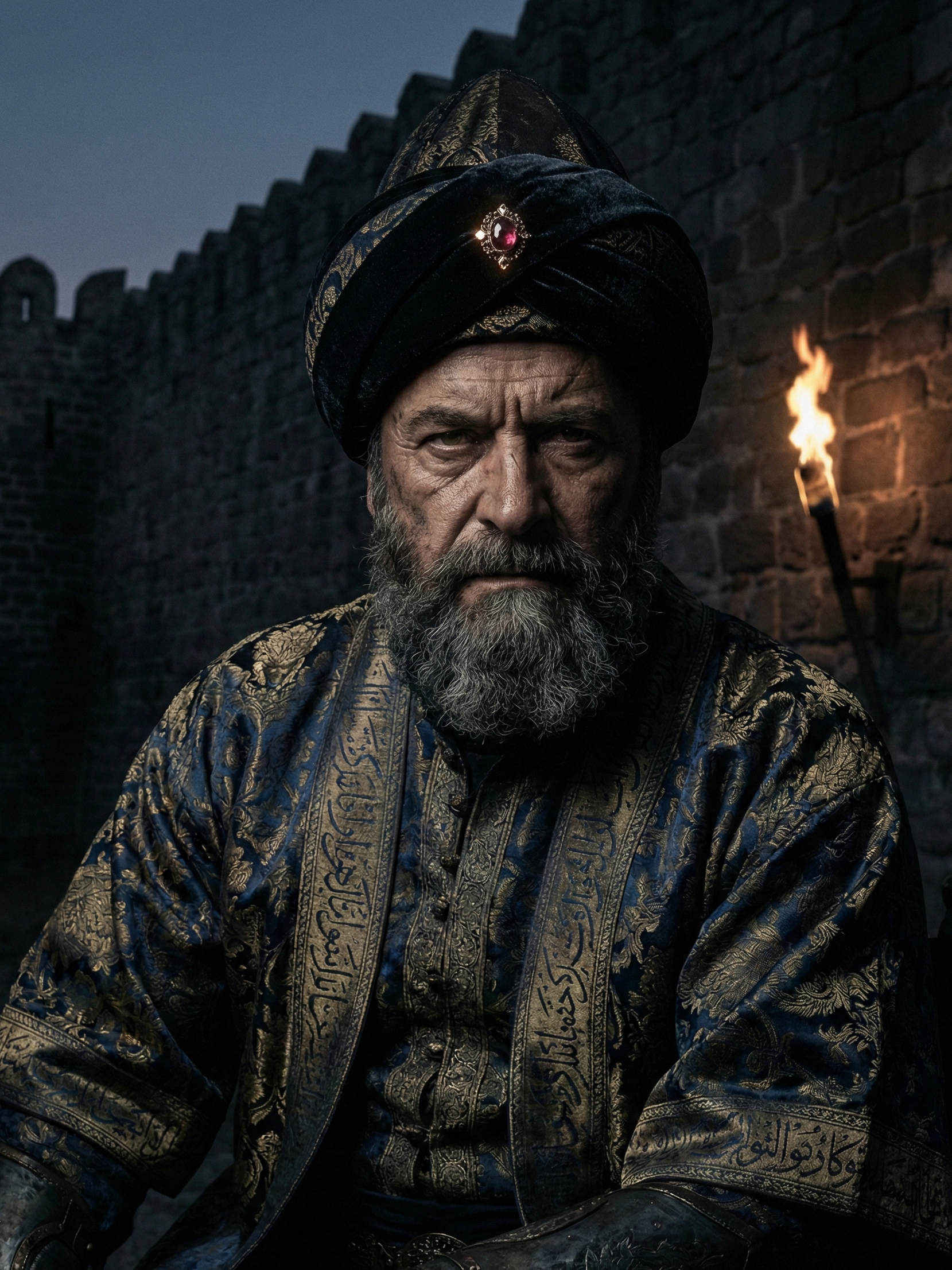
Open any standard Indian history textbook — NCERT, ICSE, or state board — and search for Ghiyasuddin Tughlaq. You will typically find a brief and flattering portrait that goes something like this:
This is the extent of what most Indians learn about Ghiyasuddin Tughlaq — a few paragraphs portraying him as a competent administrator who brought stability. The textbooks present his reign as an unremarkable transition between the Khilji and Tughlaq periods. Nothing about the discriminatory tax policies, nothing about the Warangal campaign's temple desecrations, nothing about the title "Ghazi" — Slayer of Infidels — that he proudly bore.
The documented historical record — written by medieval chroniclers who were themselves sympathetic to the Sultanate — paints a dramatically different picture. Here is what your textbooks systematically omit:
Before becoming Sultan, Ghiyasuddin Tughlaq was known as Ghazi Malik — a title earned through warfare against non-Muslims on the northwestern frontier. The word "Ghazi" literally means "one who fights in holy war against infidels." This was not a ceremonial title — it was a badge of religious warfare against Hindu and other non-Muslim populations. Textbooks conveniently omit this title or present it without context.
Amir Khusrau, in his Tughlaq Nama (1321), chronicles Ghiyasuddin's rise to power and consistently uses the title "Ghazi Malik," documenting his military exploits as religiously motivated warfare.
The court historian Ziauddin Barani explicitly records that Ghiyasuddin Tughlaq lowered tax rates for Muslims while raising taxes on Hindus. The purpose? To prevent Hindus from becoming wealthy enough to challenge the Sultanate's authority. This is not speculation — it is documented by the Sultanate's own historian.
This is institutional religious discrimination — documented, deliberate, and systematically enforced. Yet it finds no mention in standard Indian textbooks.
In 1321 and 1323, Ghiyasuddin Tughlaq personally ordered his son Ulugh Khan (later Muhammad bin Tughlaq) to conquer the Kakatiya kingdom centered at Warangal. The second campaign succeeded — and the consequences were devastating:
The ruins of Warangal Fort stand to this day as silent testimony to this destruction. Yet textbooks present the Warangal campaign as a simple "military conquest" with no mention of the cultural devastation.
Amir Khusrau's Tughlaq Nama provides a chilling account of what happened after military victories: Hindu soldiers among the defeated army lost all their possessions, while Muslim soldiers were guaranteed their lives, though still vulnerable to plunder. This systematic religious discrimination was built into the very fabric of the military.
Perhaps the most significant omission is the consequence of Ghiyasuddin Tughlaq's rise to power. He founded a dynasty that would rule for 93 years (1320–1413 CE) and produce some of India's most destructive rulers:
Without Ghiyasuddin Tughlaq's seizure of power in 1320, none of these atrocities would have occurred. Understanding the root is essential for understanding the tree of destruction.
The systematic sanitization of Ghiyasuddin Tughlaq's reign in Indian textbooks is not accidental. It is part of a broader pattern — documented by scholars like Arun Shourie in Eminent Historians: Their Technology, Their Line, Their Fraud (1998) — where politically motivated historians have deliberately minimized or omitted the documented impact of Islamic rule on Hindu civilization.
The result? Generations of Indians who know Tughlaqabad Fort as an "architectural marvel" but have never heard of the Svayambhu Shiva Temple that was desecrated under Ghiyasuddin's orders. Indians who know he was a "just ruler" but have never read Barani's documentation of his deliberately discriminatory taxation policies.
Ghiyasuddin Tughlaq is presented as "moderate" because he is compared to his more visibly destructive successors. But this comparison itself is the whitewash — it makes institutional religious discrimination, discriminatory taxation, and temple desecration appear "moderate" simply because what came after was even worse. The question is not whether Ghiyasuddin was "less destructive" than Firoz Shah Tughlaq — the question is why any level of documented religious oppression is systematically omitted from textbooks.