Chapter 7
Legacy & Modern Impact
How the dynasty Ghiyasuddin Tughlaq founded in 1320 continues to shape India today — in ruins, in textbooks, and in ongoing cultural struggles.
How the dynasty Ghiyasuddin Tughlaq founded in 1320 continues to shape India today — in ruins, in textbooks, and in ongoing cultural struggles.
Ghiyasuddin Tughlaq's greatest legacy was not his own five-year reign — it was the 93-year dynasty he founded. Without his seizure of power in 1320, the following would not have occurred:
Who may have murdered Ghiyasuddin himself. His reign (1325–1351) saw: the disastrous token currency that destroyed the economy, the forced transfer of Delhi's population to Daulatabad, punitive taxation that depopulated entire regions, and the systematic destruction of Hindu temples across the Deccan.
Whose reign (1351–1388) saw: Jizya imposed on Brahmins for the first time, destruction of the Puri Jagannath Temple, public and personal pride in temple destruction, strict Sharia enforcement leading to systematic Hindu persecution, and the execution of a Brahmin for public worship.
Ghiyasuddin Tughlaq planted the seed. His son and grandson harvested the destruction. Understanding the founder is essential for understanding the tree of devastation.
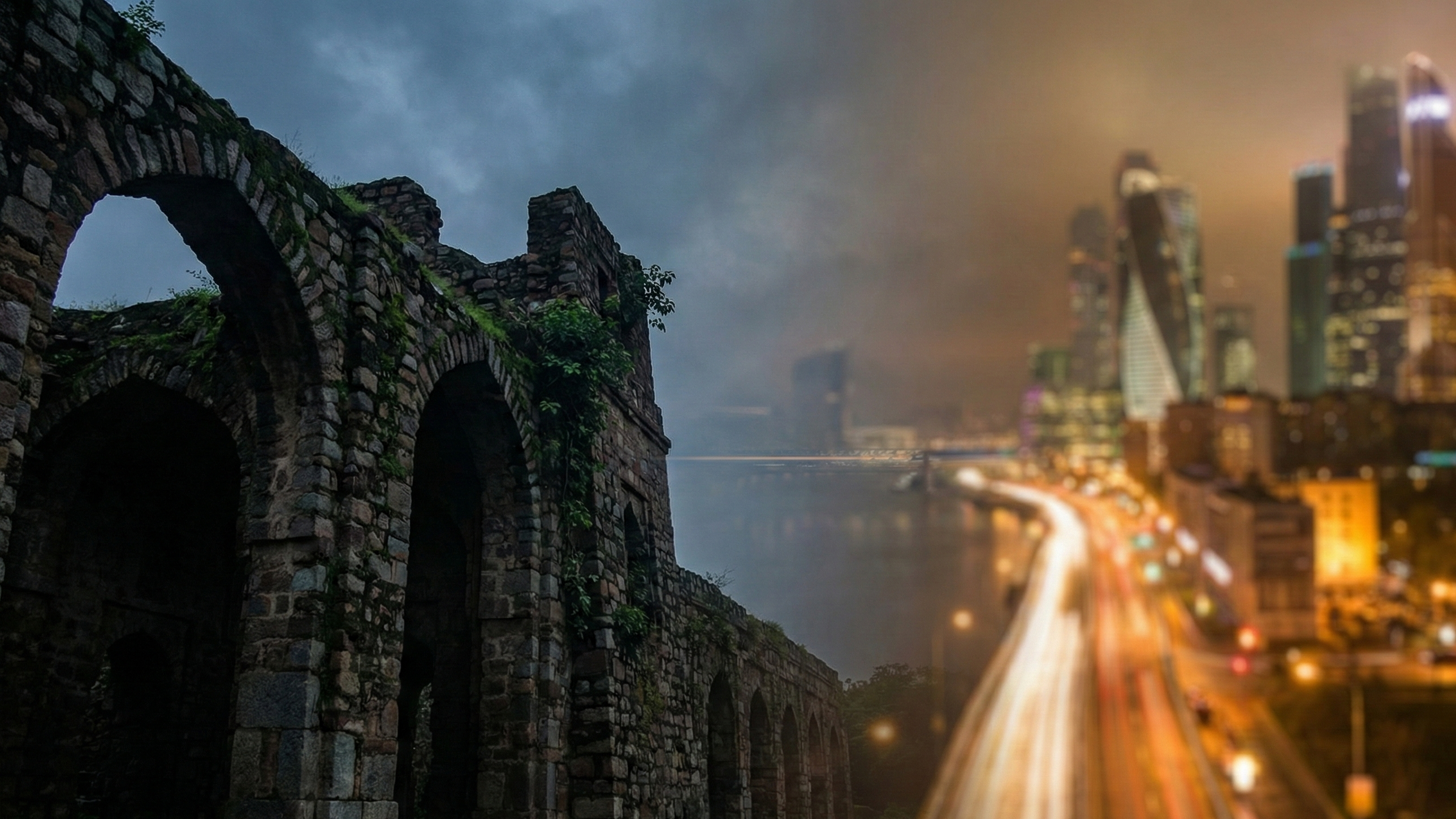
The massive stone fortification built by Ghiyasuddin Tughlaq between 1320–1325 still stands near Delhi. Textbooks present it as an "architectural marvel" — but it was built using forced labor and represented the military might of the Sultanate that oppressed millions. The fort was abandoned within decades of its construction, becoming a haunting monument to the dynasty's hubris.
The ruins of the Kakatiya capital bear silent testimony to the destruction ordered by Ghiyasuddin. Visitors today can see:
Ironically, Ghiyasuddin Tughlaq is buried in a tomb near Tughlaqabad Fort. The tomb stands as the mausoleum of a man who destroyed others' civilizational heritage while building monuments to his own glory. Meanwhile, the temples he ordered destroyed lie in ruins thousands of kilometers away in Warangal.
The systematic whitewashing of Ghiyasuddin Tughlaq's legacy in Indian education is perhaps the most insidious modern impact of his reign:
Generations of Indians have graduated without knowing that the rubble at Warangal Fort was once a vibrant civilization destroyed by a man their textbooks call "just and moderate." They know Tughlaqabad Fort as an architectural site — but not the forced labor that built it. They know the Tughlaq dynasty as a "period of medieval history" — but not the trail of destruction that defined it.
Understanding Ghiyasuddin Tughlaq's legacy is not about hatred or vengeance. It is about:
This website does not call for violence or hatred. It calls for truth — documented, sourced, and verifiable truth.