Chapter 5
Cultural Destruction
Beyond military conquest — how Ghiyasuddin Tughlaq's campaigns destroyed centuries of Hindu civilizational achievement at Warangal and beyond.
Beyond military conquest — how Ghiyasuddin Tughlaq's campaigns destroyed centuries of Hindu civilizational achievement at Warangal and beyond.
Before the Tughlaq invasion, the Kakatiya dynasty was one of the most culturally vibrant Hindu kingdoms in India. Their achievements included:
All of this was destroyed or permanently disrupted by the Sultanate campaigns ordered by Ghiyasuddin Tughlaq.
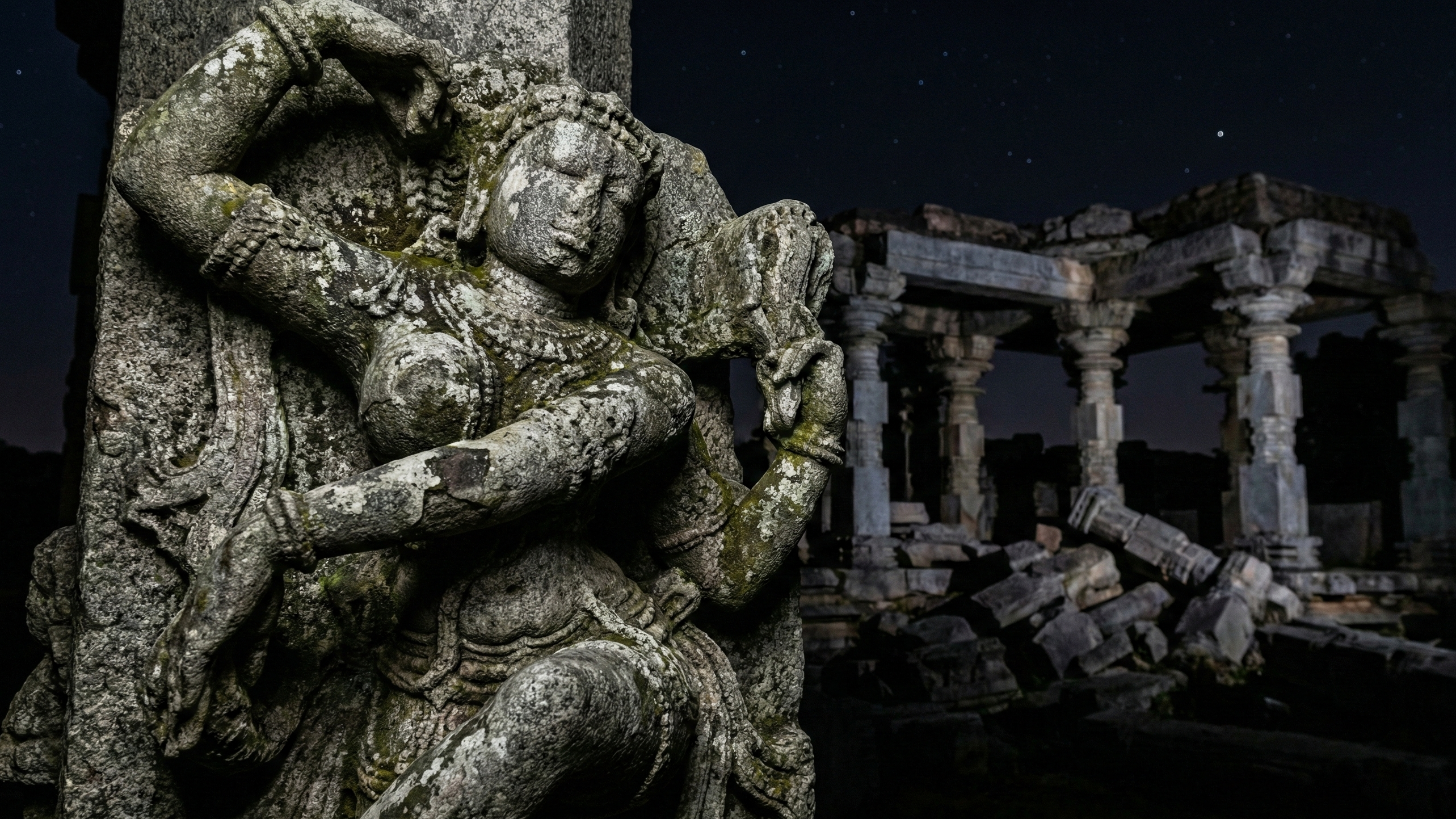
The evidence of cultural destruction at Warangal is not merely textual — it is physical and archaeological. The ruins speak for themselves:
The Svayambhu (self-manifested) Shiva Temple within the Warangal Fort complex was one of the most sacred Hindu sites in the Deccan. Its desecration during the 1323 campaign was a deliberate act of religious supremacism — destroying the spiritual heart of the Kakatiya kingdom to signal the permanent dominance of the Sultanate.
Built in 1163 CE, the Thousand Pillar Temple at Hanamkonda was a masterpiece of Kakatiya architecture. Dedicated to Shiva, Vishnu, and Surya, it featured a star-shaped platform and exquisitely carved pillars — each one unique. The temple represented the pinnacle of Kakatiya artistic achievement. Its desecration during the Tughlaq invasion was not just the destruction of a building — it was the obliteration of centuries of artistic tradition.
The ruins of Warangal Fort provide visible, physical evidence of iconoclasm that any visitor can see today:
These are not the results of natural decay. They are the evidence of intentional, targeted iconoclasm.
The cultural destruction extended beyond temple desecration. The entire wealth of the Kakatiya kingdom was plundered and transferred to Delhi:
This was not just military conquest — it was civilizational plunder. The systematic transfer of wealth, knowledge, and human capital from the Deccan to Delhi permanently impoverished the region and enriched the Sultanate at the expense of Hindu civilization.
The destruction of the Kakatiya civilization was not an isolated event. It was part of a broader pattern of Sultanate conquest that systematically targeted Hindu cultural centers:
The Tughlaq dynasty, founded by Ghiyasuddin, was a critical link in this chain of civilizational destruction.